


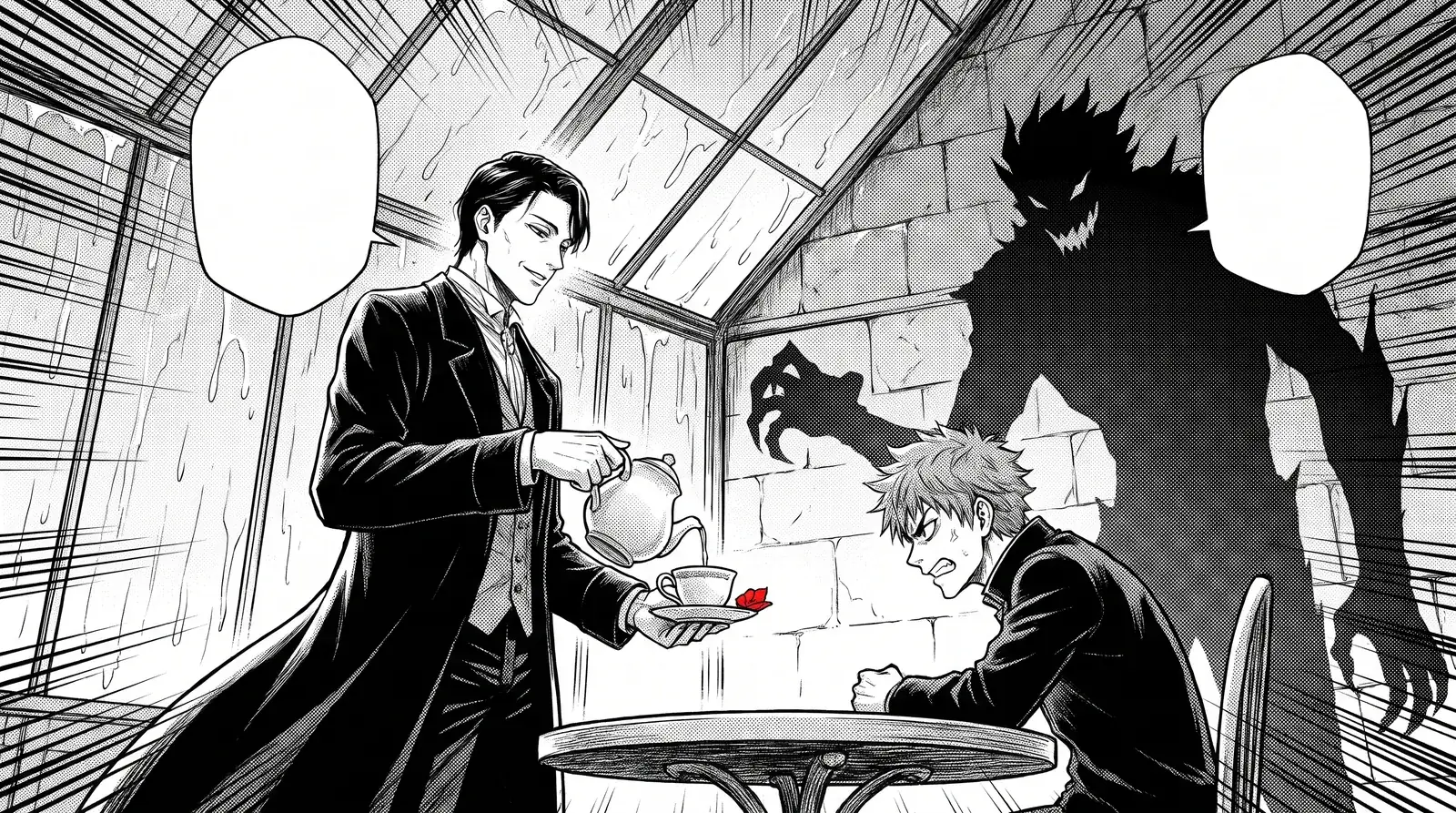
The villains people still talk about years later are rarely the strongest. They are the ones who said something true. You closed the volume half agreeing with them, and that scared you a little.
Here is how to build one, using an original villain as the running example: Warden Ilse Marrow, who runs the only prison in a flooded city.
Five steps to a villain worth fearing
Give them a reason that almost works. Ilse locks up anyone who can swim. Cruel, until you learn that the last strong swimmers sabotaged the flood walls to escape, and ten thousand people drowned. She is trying to stop it from happening again. She is wrong, but not stupid.
Make them the hero’s mirror. Our hero, Teo, is the best swimmer in the city and wants to save everyone. Ilse wanted that too, once. Put the same want in both of them and let one path go dark.
Let them win early. A villain who loses every chapter is a speed bump. Ilse catches Teo in chapter one and lets him go, because a frightened city obeys better than a martyred one. Now every win Teo has feels borrowed.
Show one kind moment. Ilse keeps a drawer of dry socks for children brought into the prison. Readers remember the socks long after the speeches.
Write one line they will quote. “You think I built these walls to keep people in. I built them because I know what is out there.”
Draw what words can’t say
In manga, a villain’s power often lives in the art more than the dialogue. A few visual habits do a lot of work:
- Stillness. The villain is the calmest person in the panel. Let everyone else move; they sit.
- Scale. Shoot them from slightly below, or let their shadow be bigger than they are.
- A signature object. Ilse’s ring of keys jingles on every page she walks into. Readers start to flinch at the sound effect alone.
- The silent close-up. One panel, no words, just their eyes after the hero says something that lands.
The mistakes that flatten a villain
- Evil for the vibe. If they enjoy cruelty and nothing else, readers stop thinking about them the moment they leave the page.
- The tragic backstory dump. A flashback that explains everything at once turns a mystery into homework. Drop one piece per arc.
- Instant redemption. If they cry and switch sides in a single chapter, their earlier choices stop meaning anything.
Put your villain on the page
In MangaOra you add your villain to the cast with a short description, generate a character sheet, and they look the same on every page. Use Direct the shot to pose them and pick the camera for the panels that matter most.
Want to see how a villain feels drawn? Start your story free and give them their first entrance.
Questions people ask
What makes a good manga villain?
A reason the reader can almost agree with, a strong link to the hero, early wins that make them a real threat, and at least one human moment that sticks.
Should my villain have a tragic backstory?
It helps, but reveal it slowly. One piece per arc keeps readers curious; the whole story at once turns the villain into an explanation.
How do I make a villain scary without making them strong?
Make them patient, calm and always one step ahead. Control of the situation is scarier than raw power.